Curious why Beverly Hills homes can feel so different from one street to the next, yet still unmistakably belong here? That variety is part of what makes the market so compelling. If you are buying, selling, or simply learning the area, understanding the architectural styles that shape Beverly Hills can help you read a home more clearly and spot what gives it lasting appeal. Let’s dive in.
Beverly Hills Is Defined by Variety
Beverly Hills is not a one-style market. Its residential architecture evolved over time, starting with early Craftsman, Mission Revival, and other Period Revival homes, then shifting in the late 1920s and 1930s toward Colonial Revival, Spanish Colonial Revival, French Normandy, Tudor Revival, and related styles.
After World War II, the city added contemporary luxury designs tied to the Mid-century Modern idiom. In Trousdale Estates, homes built from the mid-1950s forward became closely associated with Mid-century Modern, Contemporary Ranch, and Hollywood Regency design. That mix helps explain why Beverly Hills offers both historic charm and modern architectural clarity.
The city also takes architecture seriously as part of its identity. Beverly Hills uses historic resource surveys and landmark criteria to evaluate architectural significance, and in some areas it reviews visible exterior changes to support neighborhood character, scale, massing, and the city’s noted garden quality.
Spanish Styles in Beverly Hills
Spanish Mission Revival Basics
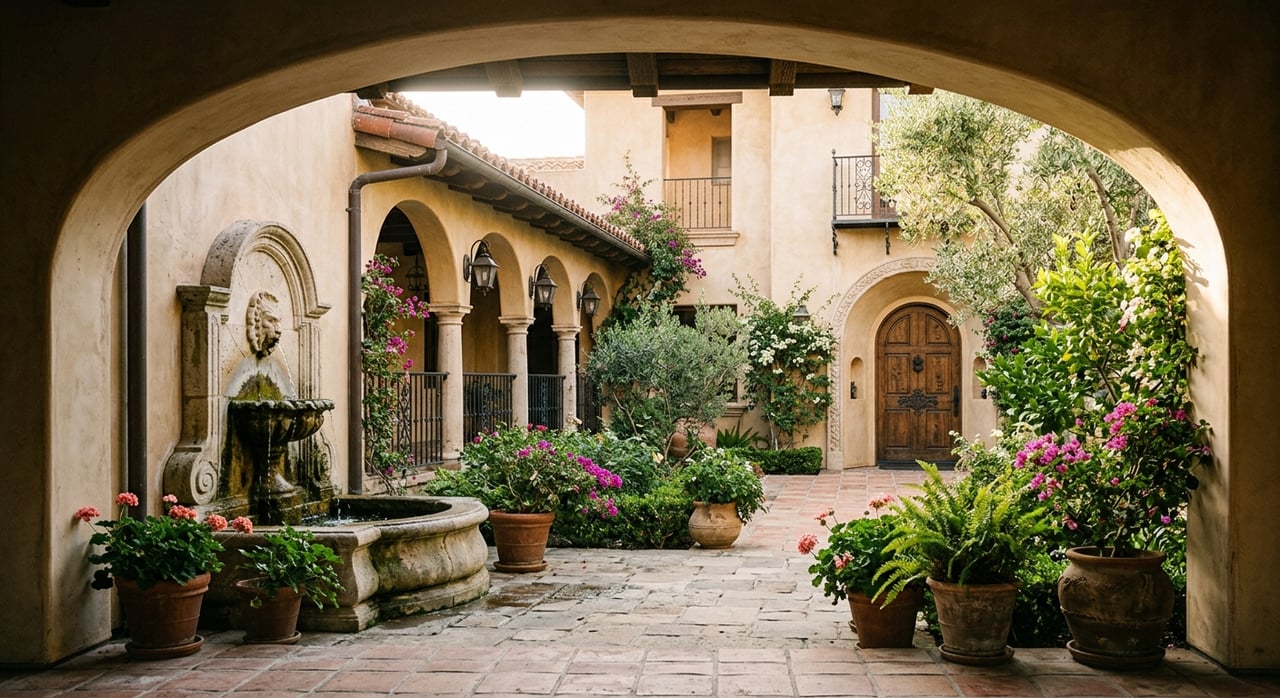
Spanish Mission Revival is one of the signature visual languages in Beverly Hills. According to the city’s style guide, these homes often feature one or two stories, low-pitched roofs, red terra cotta barrel tile, stucco walls, arched openings, decorative ironwork, and balconies.
This style tends to create a warm, textured look from the street. The details do a lot of the work, with wrought iron, stucco, and tile combining to make the home feel both relaxed and refined.
Monterey Style Features
Monterey homes keep much of the Spanish vocabulary but shift the form. The city describes stronger horizontal massing and a cantilevered covered balcony as defining traits, and it identifies Monterey as a preferred choice in Beverly Hills.
For you as a buyer or seller, that means a Monterey home may feel simpler and more linear than a more decorative Spanish Mission Revival property. The balcony often becomes the key visual feature, giving the home a calm, balanced appearance.
How Spanish Homes Live
Spanish and Monterey homes often organize daily life around outdoor arrival spaces. The city’s guide describes front patios, courtyards, recessed front doors, low walls, balconies, and driveways leading to rear garages or porte-cocheres.
In practical terms, these homes may feel like they unfold in layers rather than reveal everything at once. Instead of a single direct entry sequence, you often move through a courtyard entry or patio space before reaching the front door.
Traditional and Revival Homes
Colonial and Georgian Influence
Traditional Beverly Hills homes include Georgian, Federal, Colonial Revival, Cape Cod, and other revival forms. These homes often emphasize symmetry, stately linearity, multi-pane windows, quality wood trim, porches, porticos, and mature foundation plantings.
That formal structure can create a strong curb presence without feeling oversized. The city’s style guide notes that many of these styles are calibrated to lots around 60 feet wide or smaller, which helps explain why the best examples often feel disciplined and carefully proportioned.
Tudor and French Normandy Details
Tudor Revival and French Normandy add a more storybook silhouette to the streetscape. Steep roofs, primary gables, recessed entries, and layered landscaping are common features tied to these style families.
These homes usually read as more composed and theatrical from the curb. On a tour, you may notice that the architecture creates a stronger sense of arrival through rooflines, entry placement, and planting design.
What Traditional Homes Communicate
Traditional and revival homes often signal heritage, formality, and symmetry. The city’s guide describes Greek Revival as stately and notes that some revival styles can be harder to execute on typical Beverly Hills lot sizes south of Santa Monica Boulevard.
That is a useful point if you are comparing homes. In Beverly Hills, traditional architecture often works best when it is scaled to the site, not when it simply tries to look grand.
Mid-Century and Contemporary Styles
Moderne and International Style
Beverly Hills’ postwar story includes a strong move toward modern architecture. The city’s style guide describes Moderne homes as one- or two-story residences with flat roofs, cube-like or organic forms, mostly open floor plans, horizontal volumes, and little or no ornamentation.
International Style pushes that idea further with ribbon windows, balconies, glass walls, and indoor-outdoor spaces. If you are drawn to clean lines and visual openness, this is the vocabulary that often defines the experience.
Trousdale Estates and Modern Identity
Trousdale Estates plays a major role in Beverly Hills’ modern identity. The city’s landmark history connects the area with Mid-century Modern, Contemporary Ranch, and Hollywood Regency homes built from the mid-1950s onward.
That architectural concentration matters because it gives modern design a strong local context. In other words, contemporary homes in Beverly Hills are not just newer houses. In many cases, they are part of a specific design legacy tied to place.
How Modern Homes Live
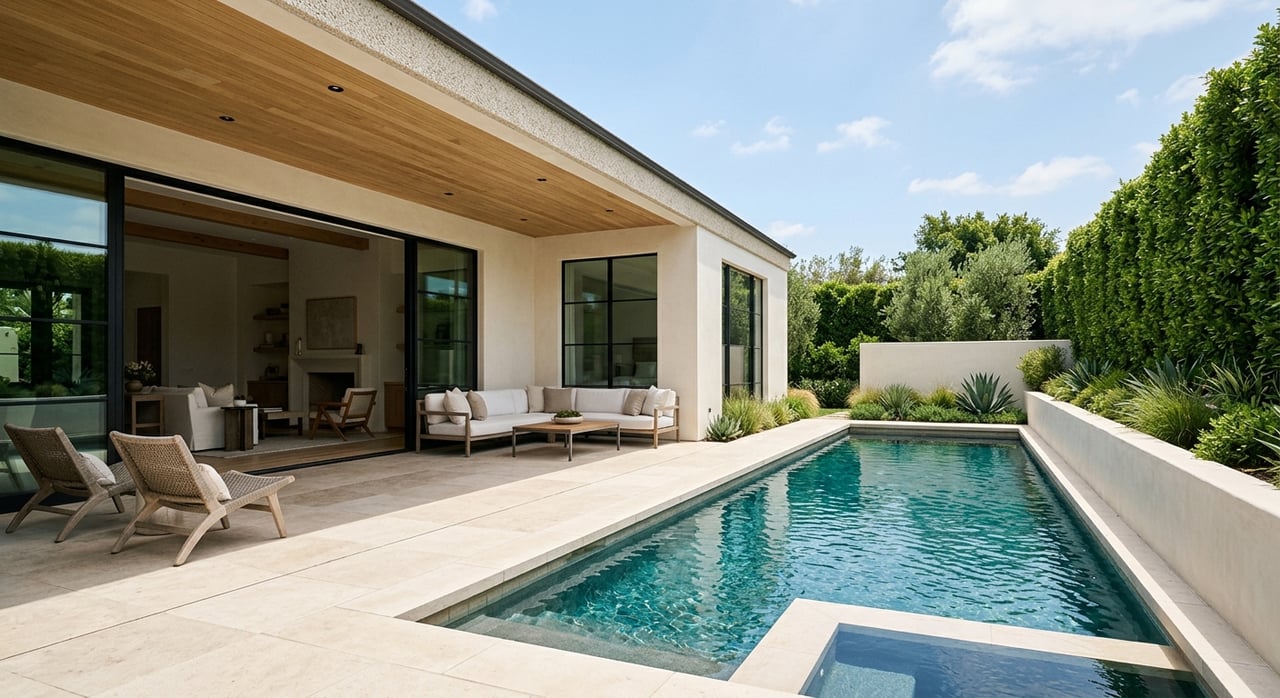
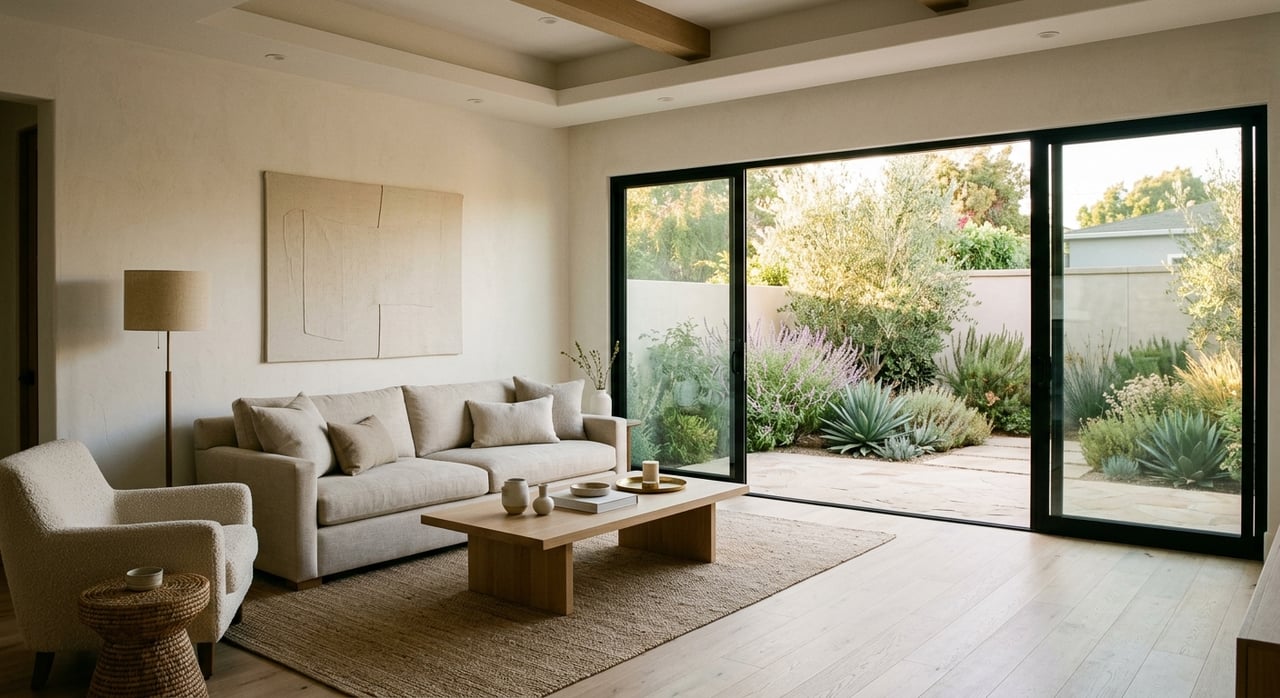
Mid-century and contemporary homes tend to open outward. The city links Moderne and International Style to open floor plans, glass walls, balconies, overhangs, structural plantings, and integrated indoor-outdoor spaces.
For you, that often translates into brighter interiors, broader sightlines, and stronger connections to terraces and landscaped grounds. The landscape is not just decoration in these homes. It is part of the architectural composition.
Postmodern and Broader Contemporary Design
Not every newer Beverly Hills estate fits a minimalist mold. The city’s style guide also identifies Post Modern Style as a principal subtype, with features such as two stories, whimsical geometric shapes, balanced asymmetry, and stylized classical references.
This helps explain why some contemporary estates feel expressive rather than restrained. Beverly Hills also includes Ranch Style and Art Deco among its additional recognized styles, showing that the city’s modern design language is broad and layered.
Why Style Matters for Buyers and Sellers
Style Shapes Daily Experience
Architecture affects more than appearance. A Spanish home may emphasize courtyards, arched openings, and entertaining spaces, while a traditional home may feel more formal and street-facing through its portico, lawn, and symmetrical facade.
A modern home often shifts the focus to privacy, openness, and integrated indoor-outdoor living. When you understand the style, you can better predict how the home may feel in daily use.
Style Can Influence Renovation Plans
In Beverly Hills, design is not purely a matter of personal taste. Single-family homes in the Central Area are subject to design review for visible exterior changes, and staff-level review depends on a clearly defined architectural style under the city’s style guide.
Other areas have different rules. The Hillside Area includes landform alteration and view preservation rules, while Trousdale Estates has its own single-family standards along with view-restoration and hedge regulations. If you are planning updates, the home’s style and location may both affect what is feasible.
Style Helps You Read Value
Architectural style can also help you understand what a home is trying to offer. Spanish and Monterey homes often appeal through charm, craftsmanship, color, and entertaining potential. Traditional homes often appeal through symmetry, proportion, and a sense of permanence.
Mid-century and contemporary homes tend to draw buyers looking for light, openness, privacy, and a cleaner visual field. When you know what a style communicates, it becomes easier to compare homes on their own terms instead of forcing every property into the same checklist.
Notable Architectural Pedigree
Beverly Hills has a deep bench of architectural talent. The city’s local register includes work by Elmer Grey, Gordon Kaufmann, Ralph C. Flewelling, Wallace Neff, Richard Neutra, Frank Lloyd Wright, Victor Gruen, John Elgin Woolf, Paul R. Williams, and William Pereira, among others.
That record reinforces a simple truth about the market. In Beverly Hills, architecture is not just background. It is part of the value story, part of the identity of the home, and often part of what buyers remember most.
If you are evaluating a Beverly Hills property, it helps to look beyond square footage and finishes. The style of the home, the way it sits on the lot, and how it relates to the city’s design standards can all shape long-term appeal. If you want help making sense of a Beverly Hills home from both a lifestyle and market perspective, Neeley Properties offers boutique, high-touch guidance tailored to your goals.
FAQs
What architectural styles are most common in Beverly Hills homes?
- Beverly Hills is known for Spanish Colonial Revival, Spanish Mission Revival, Monterey, Colonial Revival, Georgian, Tudor Revival, French Normandy, Mid-century Modern, Contemporary Ranch, Hollywood Regency, Moderne, International Style, and Post Modern homes.
What defines Spanish-style homes in Beverly Hills?
- Spanish-style homes in Beverly Hills often feature stucco walls, red terra cotta barrel tile roofs, arched openings, decorative ironwork, balconies, and courtyard-oriented entry sequences.
What makes Beverly Hills traditional homes different from modern homes?
- Traditional homes usually emphasize symmetry, gables, porticos, multi-pane windows, and a more formal street presence, while modern homes often feature flat roofs, open floor plans, glass walls, overhangs, and stronger indoor-outdoor connections.
What architectural style is associated with Trousdale Estates in Beverly Hills?
- Trousdale Estates is closely associated with Mid-century Modern, Contemporary Ranch, and Hollywood Regency homes, especially those developed from the mid-1950s onward.
Why does architectural style matter when buying a Beverly Hills home?
- Architectural style can shape layout, privacy, outdoor living, curb appeal, and possible renovation pathways, especially because some Beverly Hills areas have design review or other property standards tied to visible exterior changes.
Does Beverly Hills review exterior changes to single-family homes?
- Yes. In the Central Area, visible single-family exterior changes are subject to design review, while other areas such as the Hillside Area and Trousdale Estates follow their own rules and standards.